
Breast Fat Grafting
What Is Breast Fat Grafting?
The Procedure
Fat Harvesting: Fat is collected using gentle liposuction methods that preserve healthy fat cells.
Purification: The fat is processed to isolate strong, viable cells for optimal survival.
Fat Injection: Using precise micro-injection techniques, the fat is layered into different planes of the breast to create smooth, natural contours and improve long-term retention.
The procedure is typically performed under local anesthesia with sedation or general anesthesia and usually takes 2–3 hours, depending on the extent of treatment.
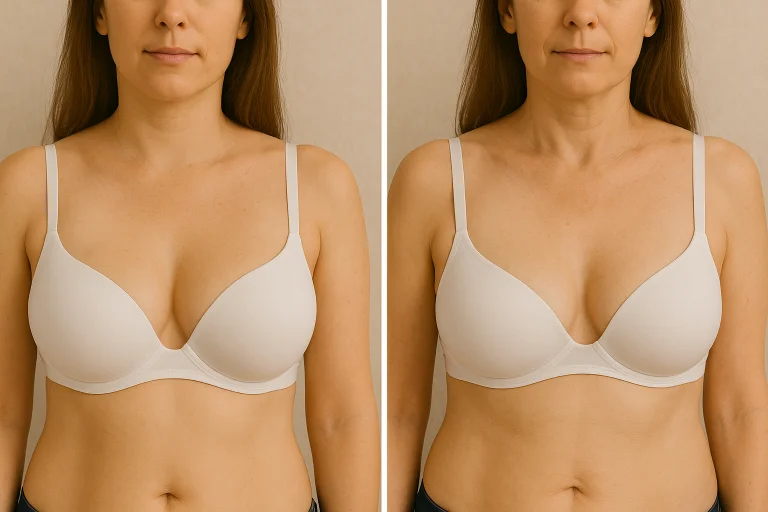
Recovery and Results
Mild swelling and bruising may occur in both donor and breast areas.
Most patients return to routine activities within 7–10 days.
Strenuous exercise should be avoided for 3–4 weeks.
About 50–70% of the transferred fat survives permanently; therefore, slight overcorrection or a second session may be advised.
Final, stable results become visible over 3–6 months.
Benefits of Breast Fat Grafting
Natural look and feel
No implants or foreign materials
Improved body contour from liposuction
Minimal scarring
Can correct asymmetry and irregularities
Useful for reconstruction after breast surgery
Radiant Skin, Confident You
Experience the perfect blend of medical expertise and aesthetic innovation at our advanced Skin & Aesthetic Clinic. From rejuvenating facials to laser and anti-aging therapies, we deliver safe, effective, and affordable treatments that enhance your natural beauty with lasting confidence.
Frequently Asked Questions
Breast fat grafting typically provides a subtle to moderate enhancement, usually increasing breast size by about half to one cup size per session. For patients desiring more volume, a second session may be recommended after the initial results have stabilized.
Yes, the fat cells that successfully integrate with the breast tissue become permanent. On average, 50–70% of the transferred fat survives long-term. Maintaining a stable body weight helps preserve the results.
Breast fat grafting uses your own natural fat, eliminating risks related to implants such as rupture or capsular contracture. When performed by an experienced surgeon, it is considered a safe and effective procedure with a low complication rate.
When performed correctly, breast fat grafting does not interfere with mammograms or breast cancer detection. Radiologists can easily distinguish fat grafting changes from suspicious findings. Always inform your radiologist about the procedure before imaging.
Patients who are very lean with minimal body fat, those seeking a large size increase, or individuals with certain medical conditions may not be ideal candidates. A detailed consultation is essential to determine suitability and discuss alternative options if needed.